Salary Account vs Savings Account in the UAE: Why You Need Both
-
A salary account receives your WPS salary and handles daily spending; it typically pays little or no interest.
-
A savings account is where money grows: competitive UAE accounts pay roughly 4 to 6% as of mid-2026, versus near zero on most salary accounts.
-
You need both: keeping savings in your spending account costs you return and makes overspending easier.
-
Salary transfer is a lever banks use: it waives minimum balance fees, unlocks better loan rates, and sometimes unlocks the best savings rates.
-
If you take a salary transfer loan, moving your salary to another bank later usually requires settling or buying out the loan first.
-
A simple automation (salary in, fixed transfer out on payday) does most of the work.
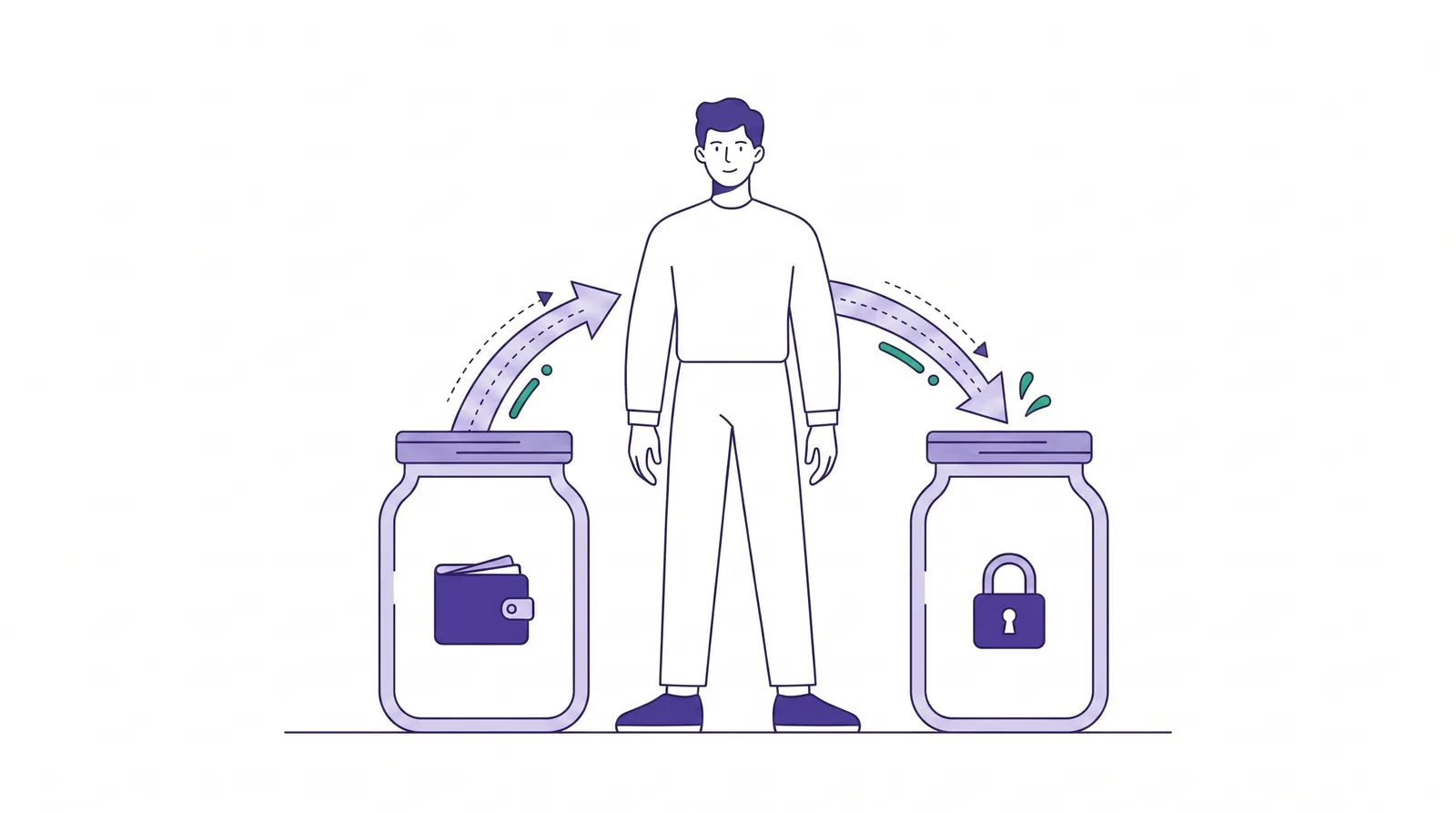
A salary account is the current account your employer pays your wages into through WPS (the Wage Protection System); it is built for spending and typically pays little or no interest. A savings account is built for accumulating: competitive UAE savings rates run roughly 4 to 6% as of mid-2026. Most residents should hold both, at settings that make saving automatic and spending deliberate.
What is a salary account?
In the UAE, most private-sector employers must pay wages through WPS, a CBUAE-supervised system that routes salaries to any licensed bank or payroll provider. Your salary account is simply the current account receiving that payment. Its practical features:
-
Debit card, transfers, bill payments, cheque book if needed
-
Minimum balance requirements usually waived while your salary (typically AED 5,000+) keeps arriving
-
Interest of roughly zero on most standard current accounts
Banks compete hard for salary accounts, offering joining bonuses and fee waivers, because your salary relationship is their gateway to selling you loans, cards and other products.
What is a savings account?
A savings account holds money you are not spending this month. The good ones pay bonus rates of about 4 to 4.5% (or up to about 6.25% with a qualifying salary transfer at some digital banks) as of mid-2026, versus under 0.5% on standard accounts. Rates, conditions and caps change frequently; see our guide to the best savings accounts in the UAE and the live savings account rate tracker for current numbers.
Why do you need both accounts?
The return argument
Money sitting in a salary account earns essentially nothing. On AED 40,000 of accumulated savings, a 4% savings account pays about AED 1,600 a year; the salary account pays roughly zero.
The behaviour argument
Money you can see behind your debit card gets spent. Moving savings out of the spending account on payday, before lifestyle catches up with it, is the single most reliable budgeting mechanic. It is the "pay yourself first" step in the 50/30/20 budget adapted for UAE salaries.
A simple two-account setup, worked example
Take-home salary: AED 15,000 into your salary account on the 28th.
-
Standing order on the 29th: AED 3,000 to a savings account paying 4% (20% savings rate).
-
Spend the remaining AED 12,000 from the salary account, guilt-free.
-
After 12 months: AED 36,000 saved plus roughly AED 780 in interest (money accumulating gradually through the year earns interest on the average balance, about half the year each on average).
Work out your own safe-to-spend and savings numbers with the UAE budget calculator. Once the savings balance exceeds your emergency fund target, the overflow can go to fixed deposits or investments.
How does salary transfer affect loans?
This is the part most people learn the hard way. In the UAE, "salary transfer" is not just an administrative detail; it is collateral in all but name.
-
Salary transfer loans (STLs) carry meaningfully lower rates than non-salary-transfer loans because the bank controls the account your income lands in and can take the instalment the moment your salary arrives.
-
Many lenders require an assignment of your end-of-service benefits and take a security cheque, deepening the lock-in.
-
Switching banks with an active STL is restricted. You generally cannot simply redirect your salary elsewhere; the new bank must buy out the loan (settle it and issue a new one), or you must settle it yourself and obtain a liability letter and clearance.
-
Your final salary and gratuity can be held. When employers mark your end-of-service payment through WPS, banks commonly freeze or offset it against outstanding loans.
So before moving your salary to chase a savings rate or a joining bonus, list your loans. If you have an STL, the realistic sequence is: get a liability letter, arrange a buyout with the new bank, then move the salary. Your debt burden ratio (DBR, capped at 50% of income under CBUAE rules) is assessed again at buyout, so check what you can carry with the DBR loan affordability calculator.
Salary account vs savings account at a glance
| Salary account | Savings account | |
|---|---|---|
| Purpose | Receive salary, daily spending | Grow money you are not spending |
| Typical rate (2026) | About 0 to 0.5% | About 4 to 6% with conditions |
| Debit card | Yes | Sometimes, often limited |
| Minimum balance | Waived with salary transfer | Varies; bonus rules matter more |
| Withdrawals | Unlimited | May cost you the month's bonus rate |
| Loan implications | Salary transfer unlocks cheaper loans, creates lock-in | None |
Should your savings account be at the same bank?
Same bank is convenient: instant transfers, one app. A different bank adds friction, which is good for savings discipline, and lets you pick the best rate on the market instead of whatever your salary bank offers. It also keeps your savings visible only to a bank that has no loan offset rights over them. If you keep everything at one bank and have loans there, remember the bank can set off balances against missed instalments. Many savers deliberately hold their emergency fund at a second bank for exactly this reason; if you are still setting up your banking, start with our guide to opening a bank account in the UAE.
FAQ
Can I have a salary account and a savings account at different banks?
Yes. WPS pays your salary to any licensed bank you nominate, and nothing stops you holding savings elsewhere. The only constraint is an active salary transfer loan, which effectively pins your salary to the lending bank until settled or bought out.
Does my salary account pay interest?
Standard current accounts typically pay nothing or a token rate. Some digital banks blur the line, paying savings-level rates on salary-linked balances or "spaces". Treat those as a salary account and savings account bundled in one app, and check the conditions on the rate.
What happens to my accounts if I change jobs?
Your accounts stay open. If your new employer pays into the same account, nothing changes except the WPS registration. If you have a salary transfer loan, tell the bank about the job change; a gap in salary credits can trigger a freeze on your end-of-service payment when it lands. Our guide to your first 90 days in the UAE covers the setup sequence for new arrivals.
Is the minimum balance waived on salary accounts?
Usually yes, while a qualifying salary (typically AED 5,000+ per month) is credited. If salary credits stop, the standard minimum balance requirement (typically AED 3,000) and fall-below fee (about AED 25 to 26.25 per month) reactivate.
How much should I keep in each account?
A common rule: roughly one month of expenses in the salary account as a buffer, 3 to 6 months of expenses in the savings account as an emergency fund, and anything beyond that in fixed deposits or investments.
Related reading:
Sources and References
-
Money Luna, UAE savings account tracker; typical bonus and salary-linked AED savings rates of 4 to 6.25% and their conditions as of 2026 (moneyluna.com)
-
UAE Experts Hub, minimum balance requirements guide; typical AED 3,000 to 5,000 minimums, fall-below fees of AED 25 to 26.25 and salary transfer waivers at major banks (uaeexperthub.com)
-
Central Bank of the UAE Rulebook, Regulations Regarding Bank Loans and Services Offered to Individual Customers; the 50% debt burden ratio cap applied to salary transfer and other personal loans (rulebook.centralbank.ae)
This article is for general information and does not constitute financial advice. Savings rates, fee waivers and salary transfer loan terms change frequently, so always confirm current terms with your bank and check loan settlement requirements before moving your salary.
Published on 9 September 2026.